Repurposed EV Batteries: A Significant Solution for China’s Grid Storage Needs
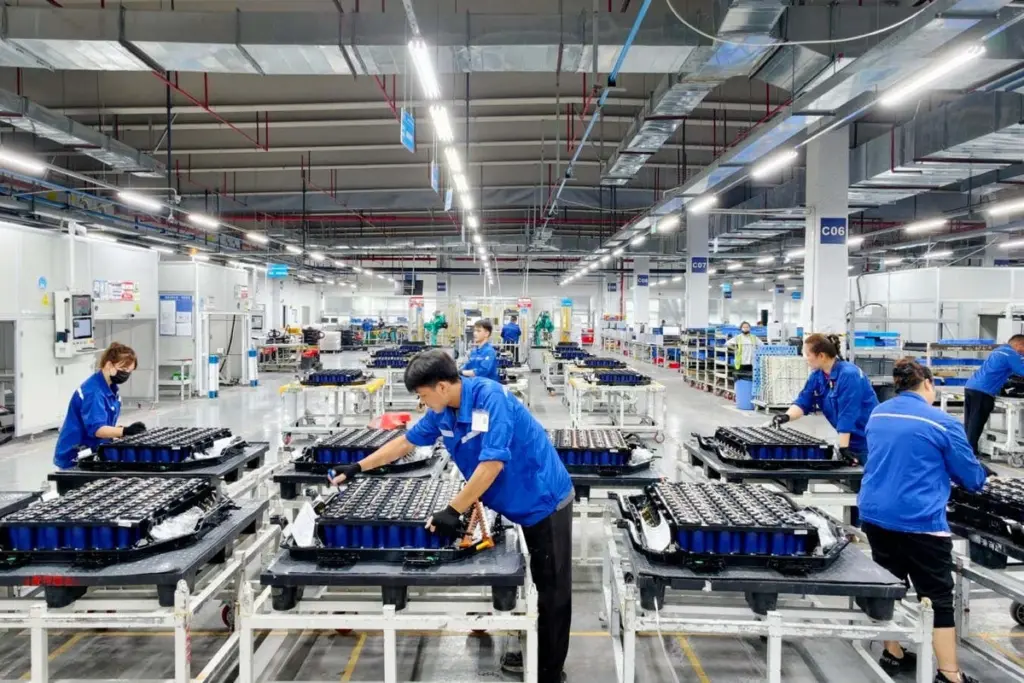
Depleted batteries from electric vehicles (EVs) possess the potential to fulfill a substantial portion of China’s grid storage requirements, estimated at two-thirds. This would allow for the accumulation of energy during periods of abundant renewable power and its subsequent release during times of high demand, effectively bridging the gap when renewable energy generation falters.
The intermittent nature of renewable energy sources, such as wind and solar power, can lead to insufficient supply during peak consumption hours, including mornings, evenings, and winter months. Traditionally, power generation from fossil fuels like natural gas and coal has been employed to compensate for these deficits. However, nations worldwide, including China, the United States, the United Kingdom, and Australia, are investing heavily in battery-based grid storage systems designed to store renewable energy for later use.
As electric vehicles become increasingly prevalent, the batteries from retired cars could be integrated into the electricity grid. This approach, championed by researchers like Ruifei Ma from Tsinghua University in China and their colleagues, offers a pathway to achieve a carbon-neutral power system more rapidly and at a reduced cost. Their study suggests that these repurposed, or “second-life,” EV batteries could meet an impressive 67 percent of China’s grid storage demands by the year 2050, while simultaneously leading to a 2.5 percent decrease in overall costs.
The Viability of Second-Life Batteries
EV batteries undergo degradation over their operational life due to repeated charging and discharging cycles. They are typically retired from automotive use when their capacity falls to approximately 80 percent of their original capability. While this diminished capacity affects a vehicle’s range and acceleration, its impact on a grid storage system is considerably less pronounced. In grid applications, large numbers of batteries are charged and discharged over extended periods, meaning that the accumulated degradation has a more manageable effect.
“There remains a considerable amount of usable energy within these batteries,” explains Gill Lacey of Teesside University in the UK. “When utilized for grid storage, their degradation rate tends to be slower.”
Rhodri Jervis from University College London highlights the economic and environmental advantages: “We should not be discarding these materials, which are costly to mine, process, and manufacture into batteries, especially when we have 80 percent of their original capacity still functional. There is significant motivation to utilize retired battery packs in second-life applications, primarily for cost savings, but I believe even more importantly for sustainability reasons.”
Economic Considerations and Market Trends
Previous research has presented varied conclusions regarding the cost-effectiveness of grid storage solutions based on used batteries compared to new lithium-ion batteries, whose prices have been steadily declining. However, the economic viability of repurposed batteries is expected to improve significantly as the number of EVs reaching the end of their automotive service life continues to grow.
In 2024, global sales of electric vehicles surpassed 17 million units, representing about 20 percent of all new car sales. China accounted for nearly two-thirds of these EV purchases, underscoring its pivotal role in the future availability of second-life batteries.
The study’s findings indicate that in a simulated scenario where batteries of diverse chemistries are sourced throughout China and utilized until they reach 40 percent of their original capacity, the deployment of second-life grid storage systems is projected to accelerate rapidly after 2030. This contrasts with the plateauing growth expected for new battery installations. The total grid storage capacity utilizing second-life batteries could reach 2 trillion watts by 2050.
Conversely, a scenario relying solely on new batteries and pumped hydro storage – a method involving pumping water to reservoirs and then releasing it to drive turbines – would only achieve approximately half of that total capacity by the same year.
Technical Challenges and Safety Protocols
While the concept of second-life battery storage is still in its early stages, innovations are emerging. The US-based company Redwood Materials has already demonstrated a 63-megawatt-hour project utilizing decade-old car batteries for a data center in Nevada. The company claims its systems can be deployed at a cost of less than $150 per kilowatt-hour and can provide power for over 24 hours, a duration significantly longer than what new lithium-ion batteries can realistically offer for such applications.
However, the effective implementation of second-life battery systems necessitates rigorous screening and categorization of batteries based on their remaining capacity. Alternatively, the energy management system must be capable of individually bypassing batteries that have reached their capacity limit. If this is not managed, the entire group’s charging cycle would halt as soon as the most degraded battery in the cluster reaches its full capacity.
Damaged batteries must be meticulously identified and excluded. Those that are approved for use require the integration of temperature and voltage sensors for each of their numerous individual cells. The risk of a thermal runaway event, which can lead to a severe and difficult-to-extinguish fire, is a critical concern when dealing with batteries, especially those with varying states of health.
Concluding on the safety aspect, Lacey states, “Undeniably, the risks are elevated. Therefore, it is crucial to implement robust safety measures, including effective isolation and balancing systems, to mitigate these potential hazards.”